how to choose a song genre for a gift
By Anzhelika Eliseeva — Songwriter on the Songive team.
Updated 8 min readGuides
Pick the genre the person already loves, not the one that impresses. The style should feel like their car stereo, their kitchen on a Sunday, the thing they hum without noticing. Everything else follows from that.
Listen to this article
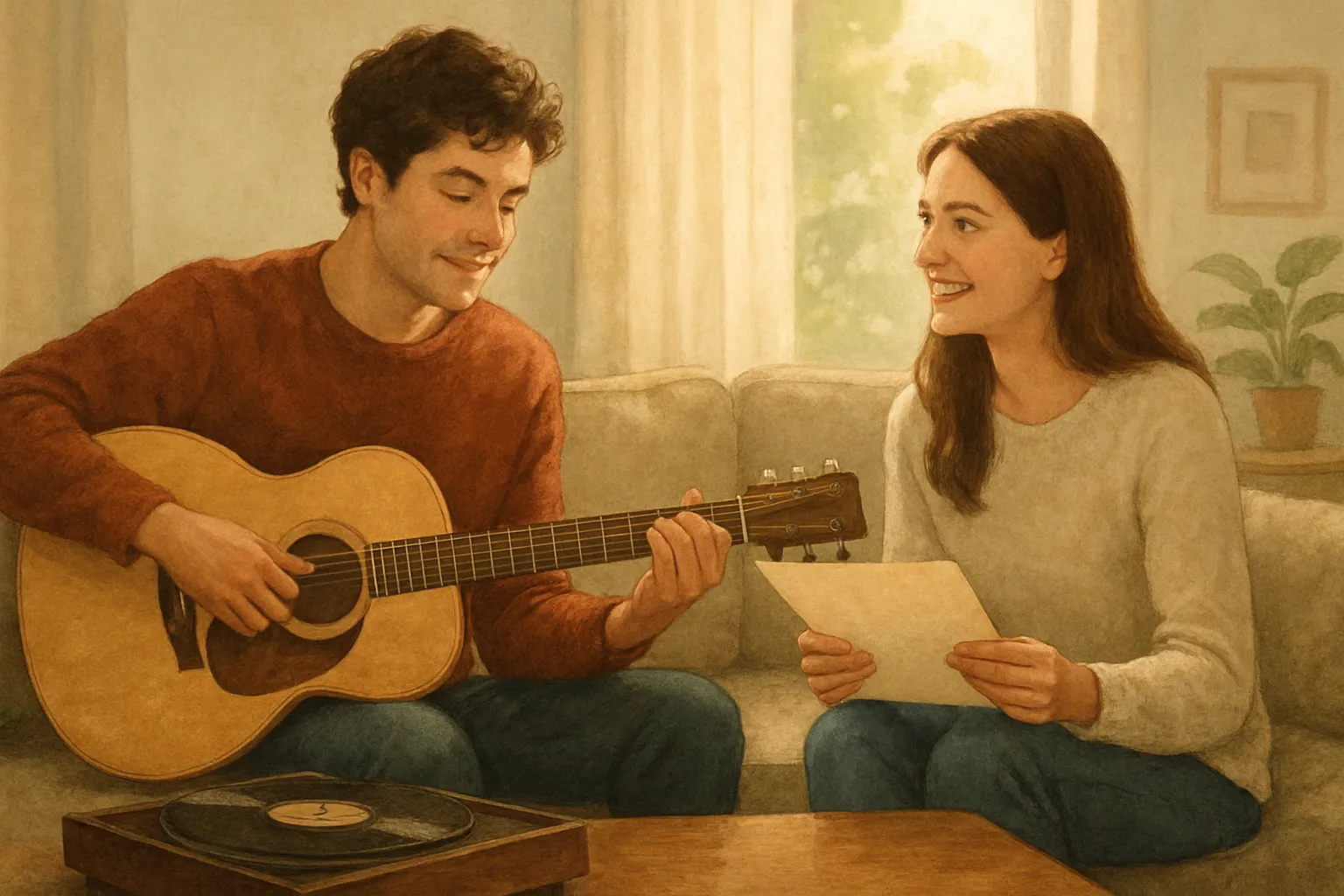
To choose a song genre for a gift, start with the music the recipient already lives inside — the radio station in their car, the record on the shelf, the thing they sing badly at the sink. Match that. The genre is a costume for the story, and it should fit the person wearing it, not the person giving it.
What choosing a genre means here: picking the musical style — folk, soul, pop, acoustic, hip-hop — that carries your words in a voice the recipient recognises as theirs. It is less an artistic decision than a listening one. You are not composing; you are noticing what they already play.
Why most people pick the wrong genre first
When a brief lands on our desk, the genre line is often the one that gives us pause. People tend to choose the style they think sounds impressive, or the one that matches the occasion — something sweeping for a wedding, something jokey for a fortieth. That instinct is understandable, and it is usually a small mistake.
The recipient does not experience the occasion. They experience the song. And a song lands hardest when it arrives in the language they already speak. A dad who has played the same battered folk records since the seventies will feel more from a plain acoustic tune than from a polished pop anthem, however grand the anthem is. We have seen it both ways more times than we can count.
So the honest answer to how to choose a song genre for a gift is quieter than most people expect. You are not choosing a genre. You are describing a person, and letting the genre fall out of that.
How do you actually pick, step by step?
Start by naming what they play, not what you'd play for them. Everything after that is small adjustment.
Here is the way we work through it when someone is stuck.
- Picture their everyday listening. Not the wedding first dance, not the funeral hymn — the ordinary Tuesday. What is on in the kitchen while they cook? What did their car radio settle on? If you can name a couple of artists they genuinely love, we can usually place the style within a bar or two.
- Weigh the mood against the words. A tender message in a driving upbeat track can feel like it is shouting over the very thing it means. If your lines are warm and a little vulnerable, a softer, unhurried style tends to hold them better. If the message is teasing and full of running jokes, a brighter, bouncier feel earns its keep.
- When in doubt, go plainer. Acoustic and mid-tempo pop are the two most forgiving styles for a gift, because they stay out of the words' way. We reach for them when a brief tells us a lot about the person but nothing about their taste. You can read more in our note on what makes a good custom song.
Have a listen to the birthday one below — the demo on this page. That started from a daughter telling us her mum liked "the old warm stuff, nothing fussy." We went acoustic and mid-tempo, put the mum's name in the chorus, and kept the arrangement small on purpose. The restraint is the point.
What we notice makes a genre land
After a lot of these, a few patterns hold true more often than not.
- The safest genre is the recipient's own. Nostalgia does most of the emotional work before a single word registers. A style they associate with a certain decade of their life carries memory the lyrics can then name.
- Occasion matters less than personality. There is no rule that weddings need ballads or birthdays need pop. A quiet folk tune at a wedding, sung to a groom who cannot bear a fuss, often outperforms the big number.
- Contrast can work, deliberately. A very sincere message set to a light, playful track can disarm someone who tears up easily and hates it. But that is a choice you make on purpose, not a genre you fall into by accident.
- Language and voice type are part of the choice. Songive can make the song in a range of styles and languages, with the recipient's name worked into the chorus, and it usually comes back in about two minutes — so trying a second feel costs you almost nothing but a moment.
Songive vs the other ways to give a song
Before the table, a plain comparison. If you commission a bespoke track from a session songwriter, you get real craft and real control over genre, but you wait weeks and pay for every revision. A cover — someone re-recording an existing song — locks you into that song's genre entirely; you cannot make it about your person. A curated playlist gathers music they already like but says nothing new. A handwritten card carries your words with no music at all. Songive sits between the studio and the card: you describe the person and the style, and a finished, personalised song comes back quickly, with the genre chosen to fit them rather than the calendar.
| Option | Genre control | Names your person | Turnaround |
|---|---|---|---|
| Songive | Wide, you steer it | Yes, name in the chorus | About two minutes |
| Bespoke songwriter | Full | Yes | Weeks |
| Cover of an existing song | Fixed to that song | No | Days to weeks |
| Curated playlist | Their existing taste | No | An afternoon |
| Handwritten card | None | Yes, in words only | An evening |
What to put in the about-them box so the genre fits
The more you tell us about how they listen, the less we have to guess about style.
- Name two or three artists they actually love. Not the tasteful answer — the honest one. "She plays Fleetwood Mac and old soul in the car" tells us tempo, warmth and era in a single line, and the genre almost picks itself.
- Say where and when they listen. "He only ever has music on while cooking" points us toward something relaxed and mid-paced. Music for a big party and music for a quiet Sunday are different animals, and where it plays hints at which one you need.
- Flag the feeling you want them to have. "I want him to laugh, then go quiet" is more useful than "make it emotional." It tells us how much brightness the track can carry before it undercuts the words.
- Note anything to avoid. If they cannot stand slow ballads or find rap embarrassing, tell us. Knowing the no-go is often as helpful as knowing the favourite, and it stops us placing lovely words in a style that makes them wince. You can add all of this when you start a song.
FAQ
How do I choose a song genre for a gift if I don't know music?▾
You don't need to name a genre at all — just name the recipient. Tell us two or three artists they love, where they usually listen, and the feeling you're after, and the style follows naturally. Choosing a genre is really about noticing what someone already plays, not knowing music theory.
Should the genre match the occasion or the person?▾
The person, almost always. Occasions have no fixed genre — a wedding does not need a ballad and a birthday does not need pop. A style the recipient genuinely loves will move them more than one that merely suits the calendar.
What genre works best when I'm not sure of their taste?▾
Acoustic or mid-tempo pop are the most forgiving choices. Both stay out of the words' way and rarely feel wrong, which makes them a safe default when your brief describes the person well but says little about their listening habits.
Can I try more than one genre for the same words?▾
Yes, and it's worth it. Because a Songive song comes back in about two minutes, hearing your message in two different styles costs almost nothing. Sometimes a message you pictured as tender lands better bright, or the other way round.
Can the recipient's name go into any genre?▾
Yes. Songive can work the recipient's name into the chorus across a wide range of styles and languages. The name in the hook is one of the things that makes the song feel unmistakably theirs, whichever genre you choose.