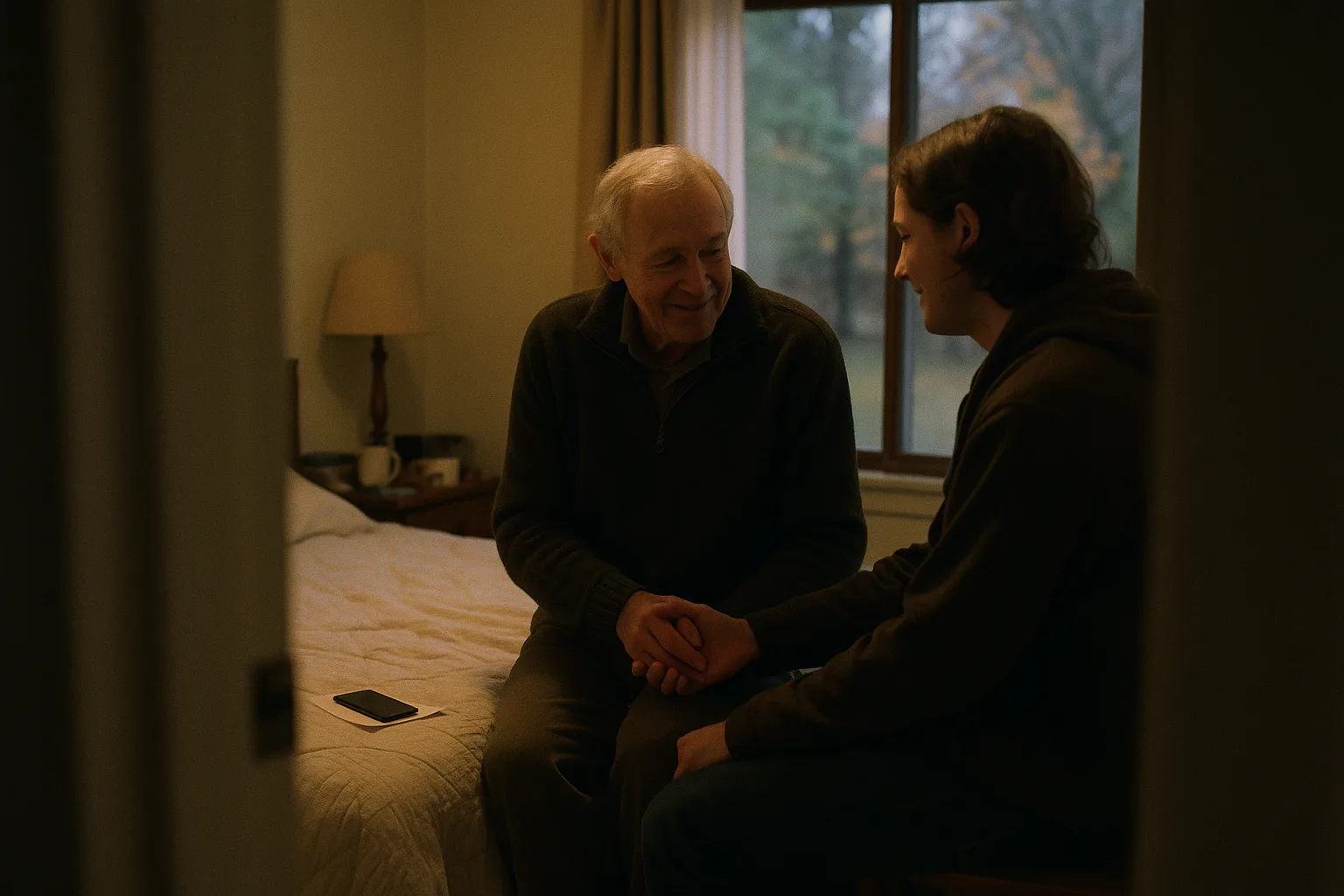
unique gifts for grandparents, built from one short brief
By Daniel Brooks — Songwriter on the Songive team.
Updated 8 min readFor someone
The grandparents who say they need nothing usually mean it. They have the mugs, the slippers, the drawer of unopened socks. What they don't have is a song that says their names and repeats the stories they always tell.
Listen to this article
The best unique gifts for grandparents are the ones they can't buy for themselves and won't put in a cupboard. A song is one of them. You send us a short note about your grandmother or grandfather, and about two minutes later you have a piece of music with their name in it, the places they've lived, and the jokes they've made a thousand times.
What a personalized song gift is: a made-to-order song written about one particular person, using the details you provide — their name, their history, the way they speak — and delivered as a finished track you can play, share, or keep. You can read more in what a personalized song is.
Grandparents are the hardest people to shop for because they've spent decades quietly refusing things. Another jumper, another photo frame, another box of biscuits — they'll thank you and mean it, and it'll sit next to the last one. So this article works differently. Instead of a list of ideas, we'll take you inside a single brief and show you what we'd do with it. That's the whole job: turn a few honest lines into a song that could only be about them.
What does a good brief for a grandparent song look like?
A good brief is short, specific, and full of the things a stranger would never guess. Here's a composite one — not a real client, but stitched together from the kind of notes we see often.
"This is for my nan, Margaret, though everyone calls her Peg. She's turning eighty in October. She grew up in Salford, raised four kids on not very much, and still does the crossword every morning with a pot of tea going cold beside her. She says 'ooh, you shouldn't have' about literally every present. She keeps butterscotch sweets in her handbag for the grandkids. When we were little she'd sing 'You Are My Sunshine' at bath time. She'd never admit she's soft, but she cries at anything on the telly."
That's it. Eight or nine sentences. It's more than enough.
What would we pull from a brief like that?
The first thing we'd protect is the name. Not Margaret — Peg. That's the version her family uses, and it's the version that will make her sit up when she hears it. Formal names feel like a birthday card from the bank. The name she actually answers to feels like the room she's sitting in.
Then we'd go for the details that can't be Googled:
- The cold tea and the crossword. A quiet morning ritual is gold. It sets a scene, and it's hers alone. We'd open the song there rather than with anything grand.
- "Ooh, you shouldn't have." That line is a gift in itself. We'd fold it into the song, gently, so the moment she says it while listening, the song has already said it back to her.
- The butterscotch sweets. Small, sensory, and instantly recognisable to every grandchild in the room. Details like this are why the whole family reacts, not just the person the song is for.
- Salford and four kids on not very much. This is the backbone — the life she's quietly proud of and would never boast about. We'd honour it without turning it into a documentary.
We'd leave 'You Are My Sunshine' as a nod, not a copy — a line that tips its hat to the song she used to sing, without borrowing the melody. That way it belongs to her memory and to this new thing at the same time.
On tone, an eightieth birthday for someone who "cries at anything on the telly" wants warmth, not solemnity. We'd keep it tender but a little playful, the way she is. Something folk-leaning and unhurried, so the words carry.
How does it actually work from your side?
Making the song takes three small steps, and none of them ask anything of you musically.
- You write the brief. A few honest lines like Peg's above. You don't need to be a writer — you need to be the grandchild who knows about the butterscotch sweets. If you can text a friend, you can do this. Start at the create page and answer the prompts in your own words.
- You get the lyrics. You'll see the words first, with the name and the stories worked in, and you can ask for changes before anything is sung. If we've written "Margaret" and she's only ever been Peg, you fix it in a line.
- You get the finished song. About two minutes after you're happy, the full track lands — ready to play at the party, text to the family group chat, or save for the drive to hers. The thank-you song below started from a brief not much longer than Peg's, and it carries the same warmth we'd aim for here.
How does a song compare to the usual grandparent gifts?
Most gifts for grandparents fall into two piles: things they'll politely shelve, and things that take weeks to arrange. A song sits outside both. A framed print is lovely and generic. A photo book is thoughtful but slow, and they've probably made three themselves. A store-bought playlist is somebody else's songs. A handwritten letter is genuinely moving and worth doing — but it can't be played to a room. Here's how a few common options line up.
| Option | Names them specifically | Ready in about | Plays to a whole room | Keeps forever |
|---|---|---|---|---|
| Songive personalized song | Yes — their name and stories in the words | ~2 minutes | Yes | Yes |
| Songfinch song | Yes | Days to weeks | Yes | Yes |
| Store-bought playlist | No | Minutes | Yes | Streaming only |
| Photo book | Somewhat | Days to weeks | No | Yes |
| Handwritten letter | Yes | An evening | No | Yes |
The point isn't that the others are bad. It's that a song does something they can't — it says a specific person's life out loud, and it does it fast.
What to put in the note about your grandparent
Four things do most of the work. Give us these and the rest falls into place.
- The name they actually answer to. Not the one on their passport — the one the grandchildren shout across the garden. "Peg," "Gramps," "Nonna," "Bampi." Write it exactly as your family says it.
- One ordinary daily habit. The cold tea, the same chair, the radio on at breakfast, the walk to the same bench. Ordinary is what makes it unmistakably them, and it gives the song somewhere real to stand.
- A phrase they always say. "Ooh, you shouldn't have." "Waste not, want not." "Put the kettle on." A repeated line lands harder than any adjective, because everyone in the family recognises it instantly.
- The thing they're quietly proud of. The house they kept, the garden, the years of Sunday dinners, the kids they raised. Name it plainly so the song can honour it without them ever having to.
One last thought, since it's around the corner: if there's a daughter in your family who'd love hearing their own story sung, a short parent-to-daughter song shared as a message or a post makes a warm, small gesture for the days ahead. The same short-brief approach works there too.
FAQ
What is a genuinely unique gift for grandparents who need nothing?▾
A personalized song about them is a strong choice because they can't buy it, won't shelve it, and it names their actual life. It works precisely because it isn't another object. Instead it repeats their name, their habits, and the stories they've told for years.
How quickly can I get a song made for my grandparent?▾
About two minutes after you approve the lyrics. You write a short brief, review the words first, ask for any changes, and then the finished track arrives. That makes it realistic even for a birthday that's tomorrow.
What should I include if I'm writing the brief myself?▾
Their everyday name, one ordinary daily habit, a phrase they always repeat, and the thing they're quietly proud of. Those four details carry a song. You don't need clever writing — you need the specifics only family would know.
Can the song mention more than one grandchild or the whole family?▾
Yes. If you tell us the grandchildren's names or a shared memory, we can work them into the words. Many people do this so the song plays as a family moment, not just a message from one person.
Is a song a good gift for a grandparent who isn't very sentimental?▾
Often it's the best kind, because the humour and the ordinary details do the talking rather than sweeping declarations. A repeated catchphrase or a running joke can land better than anything grand. We match the tone to the person you describe.