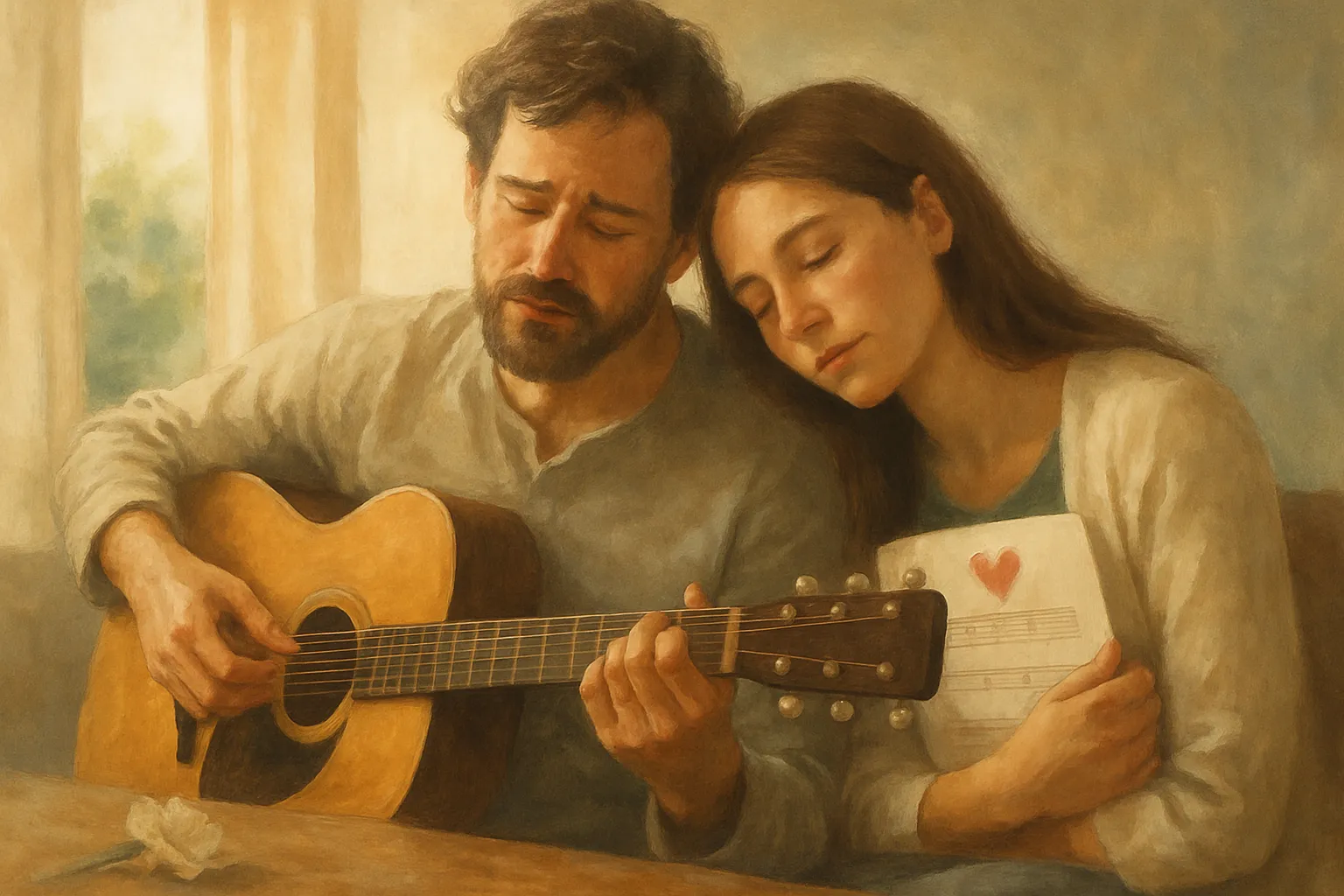
how to write a memorial song that honours someone you lost
By Daniel Brooks — Songwriter on the Songive team.
Updated 8 min readGuides
To write a memorial song, gather a handful of true things about the person and say them plainly. Not the eulogy phrases — the ordinary details you keep coming back to. A quiet setting does the rest.
Listen to this article
To write a memorial song, start with three or four small, true things about the person: how they said your name, what they always cooked, the phrase they wore out. Say those things plainly, put them in a gentle order, and let a quiet melody carry them. The details do the remembering — you don't need grand language.
What a memorial song is: a short piece of music written to honour someone who has died, built from real details of their life rather than generic tribute lines. The point isn't to sum a person up. It's to hold a few things about them steady enough to hear.
We get a lot of these briefs, and they're the ones we handle most carefully. What follows is how a memorial song actually comes together from your side — not the machinery behind it, just what you write and what you get back.
What do you write first?
Write the ordinary things before the important ones. People reach for the big statements — "she was the heart of the family", "he taught me everything" — and those are true, but they sound like every card in the shop. What lands is smaller. The way your nan pronounced "tomato". The fact that your dad kept receipts in a biscuit tin. The song he hummed doing the washing-up but could never name.
When a memorial brief reaches our desk, the lines we can build a whole song around are almost always the specific ones. A grandmother who "answered the phone before it finished the first ring" gives us more than a paragraph about how kind she was. Kindness is abstract. The phone ringing once is a picture.
So before anything else, jot down what only you would think to mention. Don't tidy it. A half-remembered fragment is worth more than a polished sentence.
The real steps, from your side
1. Put down a few true details
You write a short brief — a few lines about the person and your relationship to them. There's a simple form for it at the song request page, and you don't need to write well. You need to write honestly.
Good things to include: their name and what you called them, a habit or saying that was theirs alone, one afternoon or moment you keep returning to, and how you'd like to feel when the song ends. Some people want comfort. Some want a small laugh. Both are valid, and both belong in a memorial song.
2. You read the lyrics before anything is sung
You get the words back first. This matters more with memorial songs than any other kind, because the wording of grief is personal and you should have the final say. If we've written "passed away" and your family says "died", you tell us and we change it. If we've made it sadder than the person was, you say so.
You read them, you adjust them, you approve them. Nothing is set in the music until the words are right by you.
3. The finished song arrives
Once the lyrics are yours, the song is made and comes back to you as something you can play — usually in around two minutes. You can share it at a service, keep it for the anniversary, or send it quietly to one other person who loved them.
Our custom song with someone's name works the same way for happier occasions, but a tribute is where the plain-detail approach earns its keep. The thanks-1 song above began as a message of gratitude, and you can hear how naming small, real things does the emotional work — a memorial song leans on exactly that.
What we notice makes these land
After a lot of these, a few patterns hold. Memorial songs work when the grief is specific and fail when it's general. "We miss you every day" is true and forgettable. "Nobody makes the tea strong enough now" is true and unforgettable, because it belongs to one household and no other.
Restraint helps too. The songs that move a room aren't the ones piling on sorrow. They name the person, land one honest image, and stop. A memorial song doesn't have to carry the whole weight of a loss — it only has to hold one true corner of it steady.
And a gentle setting beats a mournful one more often than people expect. A warm, unhurried melody lets the words breathe. Heavy production tends to swallow the details that matter.
Songive next to the other ways to do it
Before the table: if you're weighing options, the honest landscape is small. You could write it yourself, which is the most personal route and also the hardest when you're grieving. You could commission a songwriter directly, which is lovely and takes time and planning most people don't have in the days after a loss. Tools like Suno hand you the machine and leave the words to you. Songfinch pairs you with an artist over a longer timeline. Songive sits in the middle: you give the true details, you approve the lyrics, and a finished tribute comes back quickly, in the language you speak, with the person's own name in it.
| Option | You write the words? | Turnaround | Names the person |
|---|---|---|---|
| Songive | You brief; you approve the lyrics | ~2 minutes | Yes, by name |
| Songfinch | Artist writes from your brief | Days | Yes |
| Suno | You write everything | Fast | Only if you do it |
| Write it yourself | Entirely you | Open-ended | Yes |
| A poem read aloud | Entirely you | Open-ended | Yes, no music |
What to put in the about-them box
Their name and what you called them. Not just "Grandad" but whether it was "Grandad", "Pop", or the name only you used. If the family called your mother "Bren" and never Brenda, that's the version the song should sing.
One habit that was theirs alone. The chair nobody else sat in. The way he read the paper back to front. The song she hummed but couldn't name. A single habit tells more than a list of virtues ever will.
A moment you keep returning to. Not the biggest day — the one your mind goes to unbidden. A morning in the garden, a drive with the radio on, the last ordinary conversation. Give us the afternoon, not the headline.
How you want it to feel at the end. Say whether you want quiet comfort, a small warm laugh, or plain steadiness. A tribute can hold a smile. Tell us which door to leave open and we'll write toward it.
FAQ
How do I start writing a memorial song if I'm not a writer?▾
Start by listing small, true details rather than trying to write well. Their name, one habit, one afternoon you keep returning to. Those fragments are the raw material; the wording is our job, and you approve every line before anything is sung.
What should a memorial song include?▾
It should include the person's real name, at least one specific habit or saying, and one concrete moment. Specific details do the remembering. Broad tribute phrases like "she was so loved" tend to sound like every other card, so keep them minimal.
Is it too soon to make a memorial song right after someone dies?▾
There's no wrong time; some people want one for the funeral and others years later for an anniversary. If it's soon, a short brief with just a few honest details is enough. You control the wording, so nothing will feel forced on you.
Can a memorial song be gentle rather than sad?▾
Yes, and often it should be. Many tributes carry a small warm laugh or quiet comfort rather than heavy grief. Tell us how you want it to feel at the end, and we'll write the mood toward that rather than piling on sorrow.
How long does it take to get a finished memorial song?▾
After you approve the lyrics, the finished song usually comes back in around two minutes. The lyric step comes first on purpose, so the wording of the tribute is right by you before it's ever set to music.