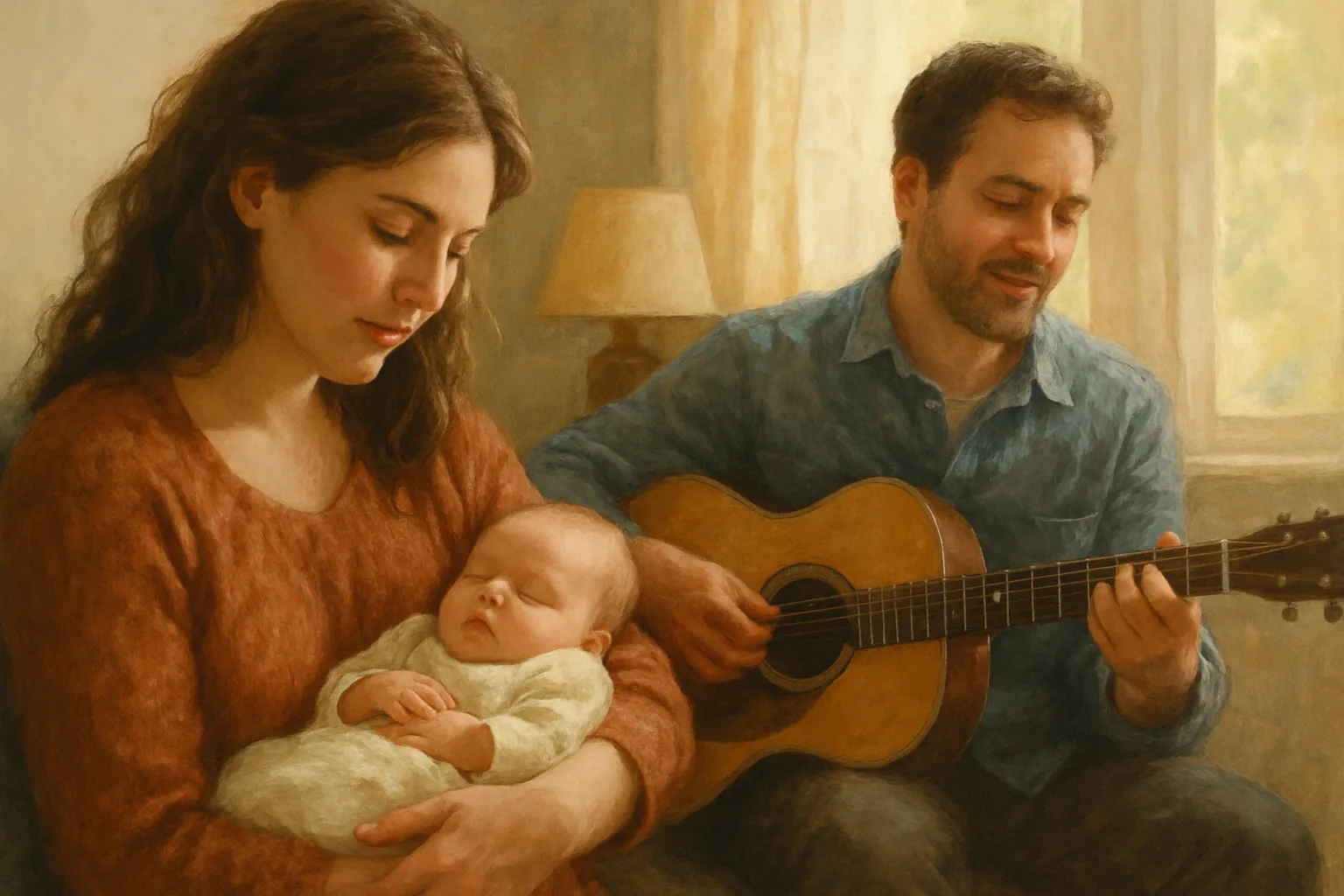
custom song for a new baby: a keepsake that lasts
By Daniel Brooks — Songwriter on the Songive team.
Updated 8 min readOccasions
A custom song for a new baby holds the child's name, the hour they arrived, and the people who waited up. Written from a short note about the family, it becomes a small record of a beginning — one they can play at every birthday after.
Listen to this article
A custom song for a new baby is a made-to-order track that names the child, the day they arrived, and the family gathered around them. You write a short note about the parents and the newborn, and a finished song comes back with the baby's name in the chorus — usually in about two minutes. It is a keepsake, not a gimmick, and it grows more familiar every year it's played.
What a custom song for a new baby is: a personalised song built around a real newborn — their name, the night they were born, the nickname already forming, the parents who waited. It arrives as a finished recording you can send, play at the christening, or keep for the child to hear when they're older.
When does a song like this actually fit?
A custom song for a new baby fits the quiet moments as much as the big ones — the first meeting, the naming day, the box of tiny clothes handed over with something to play alongside it. Here are the occasions we see most on our desk.
- The first hospital visit. You've held the baby, you've said congratulations, and you want to leave something behind that isn't another muslin cloth. A song naming the child and the hour they were born lands differently than a card left on the windowsill.
- The christening or naming ceremony. Grandparents and godparents gather, someone reads a poem, and the day wants a soundtrack. A song written for the child fills the gap between the formal words and the tea afterwards.
- A gift from grandparents to new parents. First-time grandparents often want to mark it and don't know how. A song that names their daughter or son as a new mum or dad — and the grandchild by name — says the thing they struggle to say out loud.
- The godparent who wasn't sure what to give. You've been asked to stand up for a child. A song about the promise you're making beats another silver spoon that ends up in a drawer.
- A welcome from far away. The aunt in Australia, the uncle who couldn't get a flight home — a song sent across the distance carries a voice into a room they couldn't reach. Distance makes the gesture bigger, not smaller.
- The second or third baby. The first child got a fuss made; the newest one deserves the same. A song that names the older siblings too tells the youngest they belonged from the start.
- An adoption or a long wait. Some babies arrive after years of hoping. A song can hold the length of that wait and the relief at the end of it, in the family's own words.
- A first-birthday keepsake. The newborn stage passes fast. A song written near the start becomes the thing played every first of the month — then every birthday — a small anchor to the year it all began.
How do you make a custom song for a new baby?
Making one is closer to writing a short note than composing anything. You give us the family; you get a finished song back. Here's the whole of it from your side.
One — you write a short brief about the baby and the parents. A few lines is plenty: the child's name, when they arrived, who was in the room, the nickname already sticking. One family told us their daughter arrived during a thunderstorm and they'd started calling her their little storm — that one line shaped the whole song. You can start yours on the song creation page whenever you're ready.
Two — you get the lyrics. The words come back built around the details you sent, with the baby's name in the chorus. You read them the way you'd read a card before signing it. If a line feels off — a name spelled differently, a detail you'd rather swap — you say so and it changes.
Three — you get the finished song. Pick a mood and the full recording arrives, usually in about two minutes. Something gentle for a lullaby, something warmer for a christening. The demo above — a soft folk arrangement we made for a new arrival — started from three lines a grandmother sent us about her first grandchild. You'll want to hear how little it takes.
How does a custom song compare to other new-baby gifts?
Most new-baby gifts are lovely and quickly outgrown. A song is one of the few that the child can actually receive later, in their own time. Here's how the usual options sit next to each other, so you can weigh it honestly. A keepsake box holds things; a playlist borrows other people's words; a personalised book puts the name on the page but not in the room. Songive writes the family's own story into a track with the baby's name in the chorus and hands it back fast, in the language you speak at home. A cover version dedicated at a party is charming but generic underneath. We think the difference is whether the gift is about this child or merely near them.
| Gift | Names the baby | Holds the family's own story | Ready fast |
|---|---|---|---|
| Songive custom song | In the chorus | Yes — from your note | About 2 minutes |
| Songfinch | Yes | Yes | Days |
| Suno (do-it-yourself) | If you engineer it | Only what you write yourself | Varies |
| Personalised name book | On the page | Templated story | Ships in days |
| Keepsake box | No | No | Immediate |
If you want a closer look at how a made-for-you track differs from a familiar tune with a new dedication, our note on personalised songs versus cover songs walks through it. For the wider picture, see what a personalised song actually is.
What should you put in the about-them box?
The song is only as specific as the note you send. Four things do most of the work.
- The name and how it was chosen. Give the spelling and, if there's a story, the story. A boy named after a great-grandfather, a name that took nine months of arguing — that's the line that makes the song theirs and not a template with a name dropped in.
- The night they arrived. The date, the weather, who drove, who paced the corridor. "Born at 4am during the first snow of the year" gives the song a scene to open on instead of a generic welcome.
- The people waiting. Name the parents, the siblings, the grandparents counting down. If an older brother has been asking for months, put that in — it tells the youngest they were wanted by a whole room.
- The nickname already forming. Babies collect names before they can speak — the little bear, the storm, the one who wouldn't sleep. Whichever one is sticking, send it. It's the detail parents recognise instantly.
A custom song for a new baby doesn't need to be long or clever. It needs to be true. Send the small things and the song will carry them.
FAQ
How long does a custom song for a new baby take?▾
The finished song usually arrives in about two minutes after you choose a mood. You write a short note about the baby and the family first, review the lyrics, then receive the full recording — quick enough to have ready for a hospital visit the same day.
What details should I include for a newborn's song?▾
Send the baby's name and how it was chosen, the day and circumstances of the birth, the family waiting, and any nickname already forming. A few true lines beat a long list. Specific details are what make the song feel written for this child rather than any child.
Can grandparents give a song like this?▾
Yes, and they often do. A song from grandparents can name their own child as a new parent and the grandchild by name, which says the sentimental thing many grandparents find hard to speak aloud. It works equally well from godparents, aunts, or distant relatives.
Can I choose the style of music?▾
Yes. You pick a mood after the lyrics are set — a gentle lullaby, a warm folk arrangement for a christening, something brighter for a party. The demo on this page is a soft folk version we made for a new arrival, which suits most keepsakes for a baby.
Can the song be in a language other than English?▾
Yes. You can have the song written in whichever language the family speaks at home, so a grandparent or relative hears the baby's name and story in their own words. This matters most for families spread across countries who want everyone included.